One Cheap Sensor, Suddenly a $400 Problem: What Your O2 Code Is Really Telling You

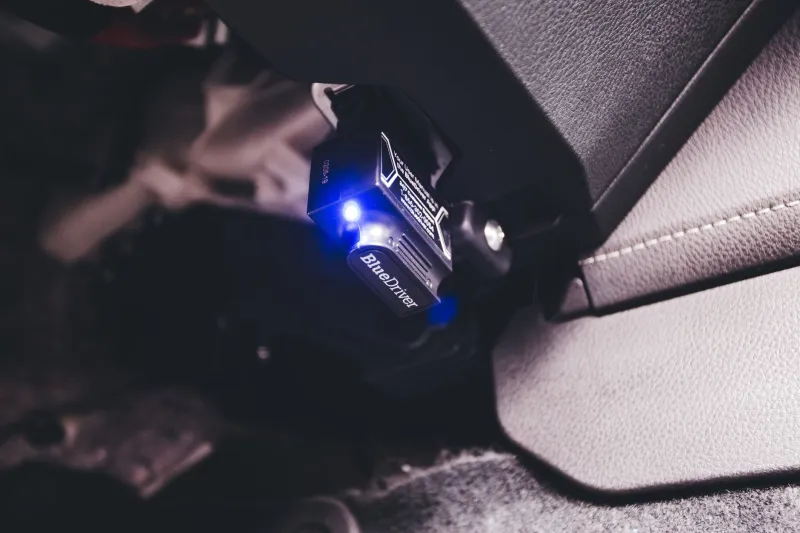
You plug in a code reader, or the shop pulls the codes for you, and there it is: P0138, P0141, maybe P0135. An oxygen sensor code. Seems straightforward. You Google the part, find it for eight to fifteen bucks on RockAuto, and figure you're looking at a quick Saturday fix.
Then the service advisor calls you back. Suddenly you're staring at an estimate that includes a new catalytic converter, an air-fuel sensor, a fuel trim inspection, and a "full exhaust system evaluation." The total? Somewhere north of $400. Maybe a lot north.
So what actually happened between "replace the O2 sensor" and "we recommend all this additional work"? Let's break it down.
What an Oxygen Sensor Code Actually Means
Your vehicle runs a network of oxygen sensors — typically two per bank of cylinders — that monitor exhaust gases to help the engine computer (the ECM) fine-tune the air-fuel mixture. The upstream sensor, positioned before the catalytic converter, feeds live data into the fuel management system. The downstream sensor, sitting after the cat, mostly monitors catalytic converter efficiency.
When the ECM sees a voltage or response reading that falls outside expected parameters, it throws a code. Common ones include:
- P0136 / P0138 — Bank 1, Sensor 2 circuit low or high voltage
- P0141 — Bank 1, Sensor 2 heater circuit malfunction
- P0131 / P0132 — Bank 1, Sensor 1 circuit low or high voltage
- P0135 — Bank 1, Sensor 1 heater circuit malfunction
Here's the key thing to understand: these codes tell you a sensor reported an abnormal signal. They do not tell you why. That distinction is where a legitimate diagnosis ends and a sales pitch begins.
The Upsell Playbook, Step by Step
Most shops aren't running a scam outright. What they're doing is following a logic chain that sounds reasonable on the surface but skips the actual diagnostic work.
It goes something like this:
- Code says O2 sensor is misbehaving.
- A misbehaving O2 sensor can indicate a failing catalytic converter.
- Therefore, we should check — or just replace — the catalytic converter too.
- While we're in there, the fuel trims look a little off, so maybe the injectors need cleaning.
- And since you're already paying for labor...
You can see how a single $8 sensor balloons into a half-day job with $300 in parts. Each individual recommendation might have a technical justification. But without proper diagnostic steps, they're educated guesses being billed as confirmed faults.
What a Real Diagnosis Looks Like
A technician who's actually doing the job — not just reading codes and recommending parts — will do a few specific things before telling you what needs replacing.
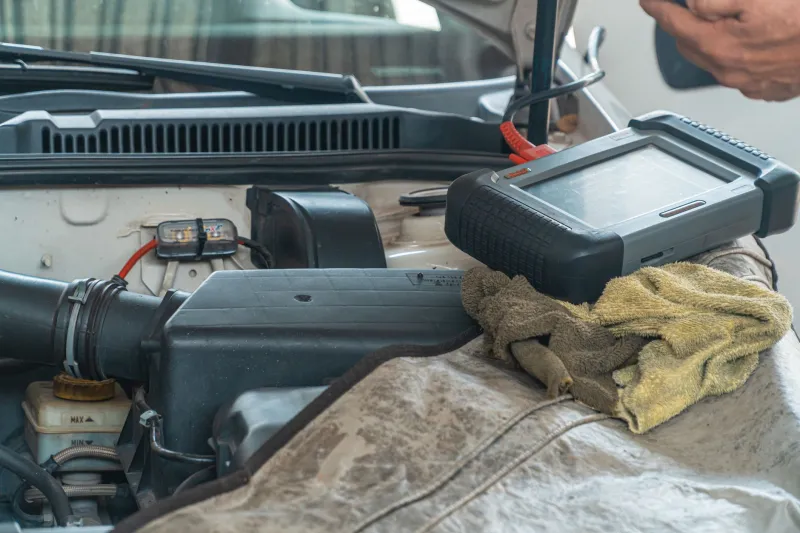
Live data monitoring. A capable scan tool (not just a basic code reader) can display real-time O2 sensor voltage. A healthy upstream sensor should oscillate rapidly between roughly 0.1V and 0.9V as the engine manages the air-fuel mix. A downstream sensor should be relatively flat and stable. If the tech isn't pulling up live data, that's a red flag.
Heater circuit testing. Many O2 sensor codes — P0141 especially — relate specifically to the sensor's internal heater circuit, not the sensor's ability to read oxygen at all. This is a wiring or connector issue as often as it is a bad sensor. A quick resistance check with a multimeter can confirm it.
Fuel trim review. Short-term and long-term fuel trim values tell you whether the engine is compensating for a lean or rich condition. If trims are within a few percent of zero, the sensor issue is likely isolated. If they're swinging hard in one direction, there may be a vacuum leak, injector issue, or MAF sensor problem feeding the fault — not a cat failure.
Visual inspection of the sensor and wiring. Rodent damage, heat shield contact, and corroded connectors are surprisingly common causes of O2 sensor codes. Sometimes the fix is a $4 connector pigtail and ten minutes of labor.
If a shop skips these steps and jumps straight to "we recommend replacing the catalytic converter," you're not getting a diagnosis. You're getting a menu.
How to Push Back at the Counter
You don't need to be a mechanic to ask the right questions. Here are a few that will tell you a lot about how a shop operates:
"Can you show me the live sensor data?" A good tech will have this documented. If they can't show you the O2 voltage waveform or explain what it showed, they didn't look.
"Is the catalytic converter code showing up separately?" Catalyst efficiency faults have their own codes — P0420 and P0430 are the big ones. If those codes aren't present, there's no hard evidence the cat is failing. A shop recommending cat replacement without a P0420 code and supporting data is speculating.
"What did the fuel trims show?" If they can't answer this, they didn't run a real diagnostic. Fuel trim data is basic information any scan tool with live data capability can pull in under five minutes.
"Can we start with just the sensor and retest?" On a heater circuit fault especially, this is completely reasonable. Replace the sensor, clear the code, drive a few cycles, and see if it returns. If it does, then you dig deeper. If a shop refuses this approach and insists on doing everything at once, that tells you something.
The Part Itself: Don't Overspend Here Either
OEM oxygen sensors from the dealer can run $80 to $150 or more. Quality aftermarket options from brands like Bosch, Denso, or NTK are typically $20 to $50 and perform just as well for most applications. If a shop is quoting you dealer-cost parts on a routine O2 sensor replacement, ask if aftermarket is an option.
Also worth noting: some vehicles require a specific sensor type — wideband vs. narrowband — and using the wrong one will cause new codes immediately. Make sure whoever is doing the work knows your year, make, model, and engine size before ordering anything.
The Bottom Line
Oxygen sensor codes are one of the most common fault codes on the road, and they're also one of the most commonly misused starting points for upselling additional work. That's not always intentional — sometimes it's just a shop that doesn't invest in proper diagnostic time. Either way, the result is the same for your wallet.
Knowing what the code actually means, what a real diagnosis involves, and which questions to ask puts you in a completely different position at the service counter. You're not being difficult. You're being informed. And more often than not, an informed customer walks out paying for what their car actually needs — not everything the shop thought might also be a problem.
Diagnose it right. Fix what's broken. Drive it.