Skip the Diagnostic Fee: 7 Free Checks You Can Do Right in Your Driveway
Let's be honest — walking into a repair shop without knowing what's wrong with your car puts you at a serious disadvantage. Diagnostic fees at most US shops run anywhere from $100 to $175, and that's before a single wrench turns. The frustrating part? A lot of what a tech checks first, you can check yourself for free.
None of this means you should skip the mechanic. What it means is that you can show up with actual information instead of just a symptom and a prayer. Here's how to run your own pre-diagnosis before you make that appointment.
1. Give the Engine Bay a Real Look
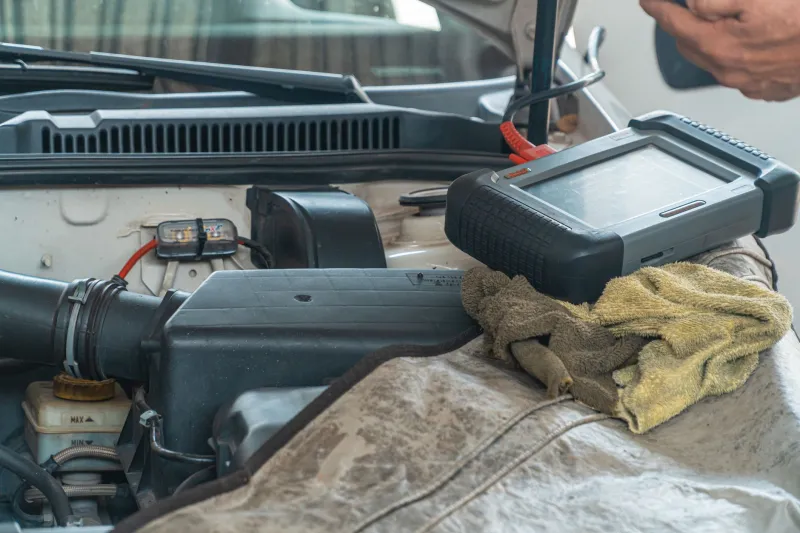
Pop the hood and spend five minutes actually looking around. You're not trying to rebuild anything — you're looking for obvious problems that are easy to miss when you're just driving.
Check for:
- Loose or cracked hoses — squeeze coolant and vacuum hoses. They should feel firm, not brittle or spongy.
- Frayed or melted wiring — rodents love engine bays, and chewed wires are more common than you'd think.
- Corrosion on battery terminals — a white or bluish crust around the posts can cause all kinds of weird electrical gremlins.
- Anything that looks obviously out of place — a disconnected hose, a missing cap, a puddle of something under the car.
Take photos as you go. You'll want them later.
2. Check Every Fluid — Level AND Condition
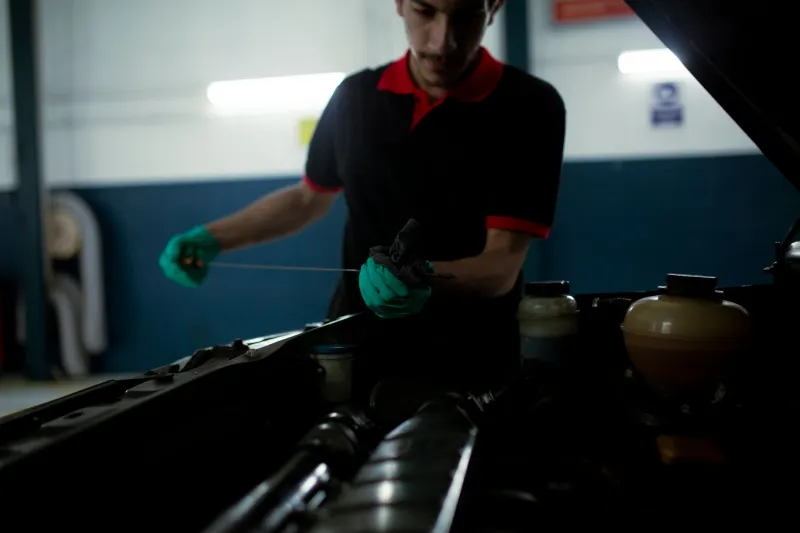
This takes maybe ten minutes and tells you a lot. Pull every dipstick and check every reservoir.
- Engine oil: Low is bad. But also look at the color. Fresh oil is amber. Dark brown is old. Milky or foamy oil is a red flag for a head gasket issue.
- Coolant: Should be green, orange, or pink depending on type — never rusty or oily.
- Brake fluid: Clear to light yellow. Dark brown fluid means it's absorbed moisture and needs replacing.
- Power steering fluid (if applicable): Should be clear or slightly pink, not dark or burnt-smelling.
- Transmission fluid: Check your owner's manual for the right procedure. It should be red and slightly sweet-smelling — not dark or burnt.
Low fluids are a symptom, not just a maintenance item. If something is low, it went somewhere.
3. Use Your Nose
Your nose is a legitimate diagnostic tool. Different problems have distinct smells, and learning to recognize them can point you in the right direction fast.
- Burning rubber or plastic — could be a slipping belt or something resting against a hot exhaust component.
- Rotten eggs (sulfur) — often points to a catalytic converter problem or a battery issue.
- Sweet smell near the front of the car — coolant leak, possibly from a hose or the heater core.
- Burning oil — oil dripping onto a hot surface somewhere in the engine bay.
Smell around the engine bay, near the wheels, and from the exhaust. Different locations narrow down different systems.
4. Listen Before You Dismiss It
That weird noise you've been half-ignoring? It's data. Try to describe it as precisely as you can, because "it makes a noise" is the least useful thing you can tell a mechanic.
Note:
- When does it happen? Cold start only? Highway speeds? Turning left? Braking?
- What does it sound like? Knock, rattle, grind, squeal, hiss, tick?
- Where does it seem to come from? Front left wheel? Under the hood? Somewhere under the car?
If you can, record a short video with your phone while the noise is happening. Even a rough audio clip gives a tech something real to work with.
5. Grab a Free OBD-II App and a Cheap Bluetooth Adapter
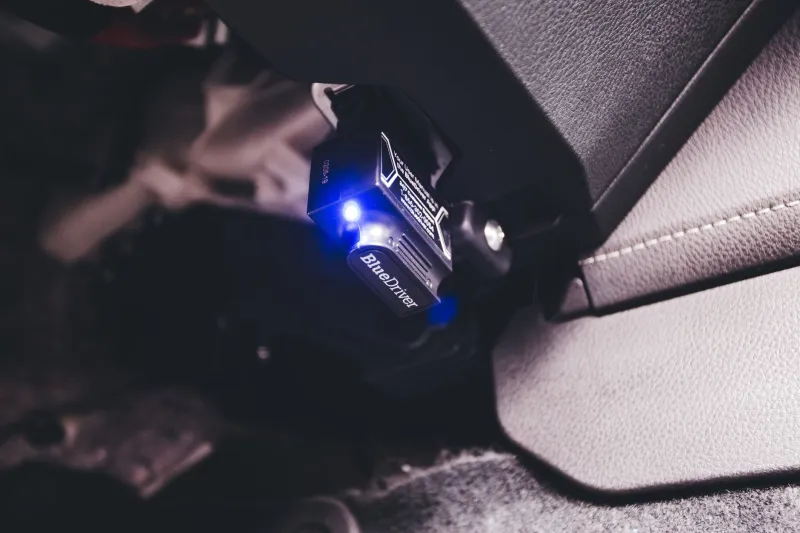
If your check engine light is on — or even if it's not — this is the single most powerful thing on this list. Every car sold in the US after 1996 has an OBD-II port, usually located under the dash on the driver's side.
A Bluetooth OBD-II adapter runs $20 to $30 on Amazon (brands like FIXD, Veepeak, or OBDLink are solid choices). Pair it with a free app like Torque Lite (Android) or OBD Fusion (free tier on iOS), and you can read stored fault codes yourself.
The app will give you a code like P0420 or P0171. Write it down, then search it on a resource like codeoneauto.com or the NHTSA database to understand what it actually means. You'll walk into the shop knowing the code, the system it affects, and common causes — not just that a light is on.
6. Check Your Tires Beyond Just Pressure
Tires tell stories. Uneven wear patterns are a direct signal of alignment issues, suspension problems, or chronic underinflation.
- Wear on one edge only — alignment or camber issue.
- Wear in the center, not the edges — chronically overinflated.
- Cupping or scalloping (wavy pattern) — worn shocks or struts.
- Feathering (smooth on one side, sharp on the other) — toe alignment problem.
Check tire pressure while you're at it. A lot of handling complaints and even some fuel economy drops come back to something this simple.
7. Do a Cold Start and a Short Test Drive — On Purpose
Instead of just commuting and hoping for the best, do one deliberate observation drive. Start the car cold and watch for:
- Excessive smoke from the exhaust on startup (blue = oil burning, white = coolant, black = rich fuel mixture)
- How long it takes to idle smoothly
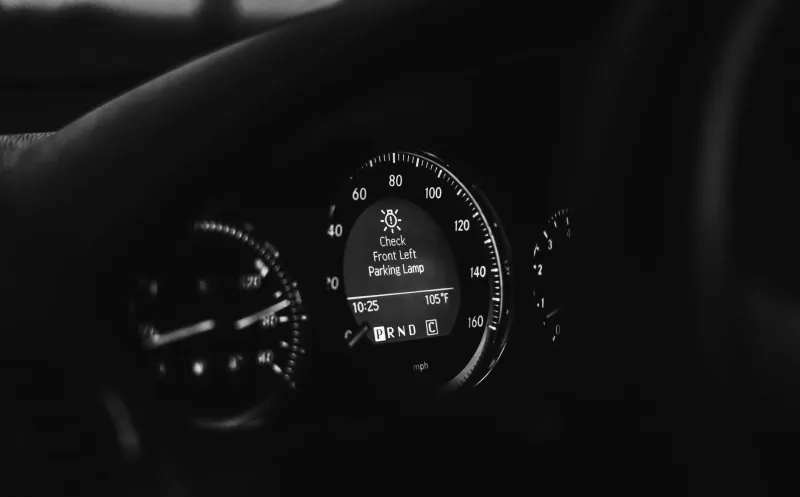
- Any warning lights that appear and then disappear
Then drive it with intention. Accelerate on the highway. Brake hard in a safe spot. Turn the wheel lock to lock in a parking lot. You're trying to reproduce whatever symptom brought you here.
Now You're Ready to Talk to a Mechanic
None of this replaces a trained technician with a lift and a professional scan tool. But it changes the conversation entirely. Instead of "my car's been acting weird," you walk in with notes, photos, a fault code, and a clear description of when and how the problem happens.
That information saves time — which saves money. And it makes it a lot harder for anyone to sell you a diagnosis you didn't need in the first place.
Diagnose it. Fix it. Drive it.