Your Car Was Fine at Inspection. Now It Isn't. Here's What's Actually Going On.
Your Car Was Fine at Inspection. Now It Isn't. Here's What's Actually Going On.
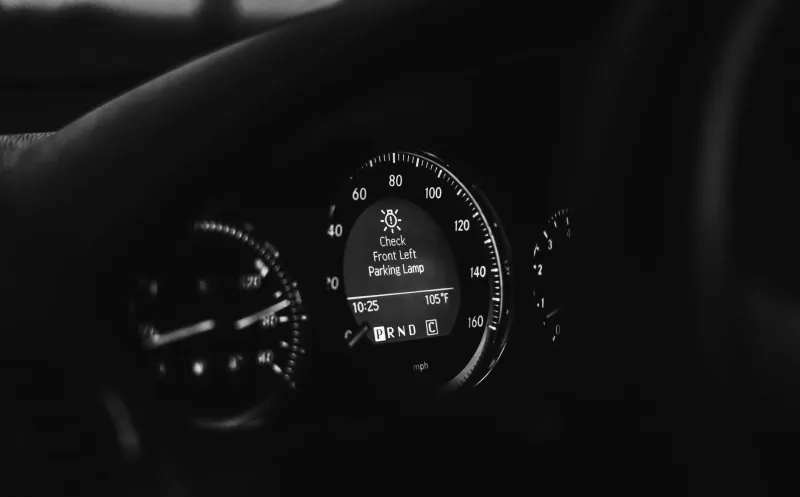
You passed your state inspection four weeks ago. Clean bill of health, sticker on the windshield, everything fine. Now your check engine light is flickering, the transmission hesitates when you merge onto the highway, and something feels subtly wrong in a way you can't quite put into words.
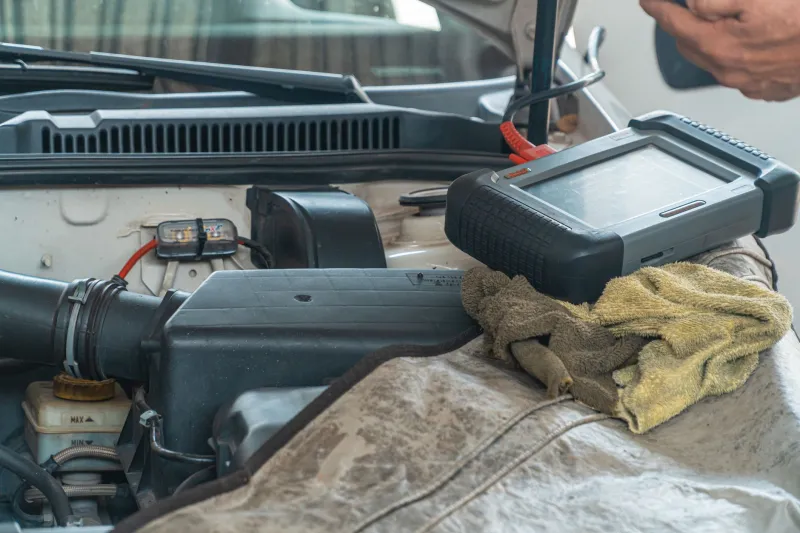
The shop hooks up a scanner. No codes. The tech drives it around the block. Nothing. They look at you like maybe you imagined the whole thing.
You didn't. What you're dealing with is an intermittent fault — and it's one of the most genuinely difficult problems in modern automotive diagnostics.
What Makes a Fault "Intermittent"?
Most people think of a check engine light as binary: either something is broken or it isn't. The reality is more complicated. Your car's Engine Control Module (ECM) — and the various other control modules managing the transmission, ABS, airbags, and more — are constantly monitoring sensors and comparing readings against expected values.
When a reading falls outside the acceptable range, the module logs a Diagnostic Trouble Code (DTC). But there are different categories of how that code gets stored, and that distinction matters a lot.
Active (current) codes are present right now. The fault condition exists at this moment, the light is on, and a scanner will pick it up immediately.
Pending codes are codes the system has flagged but hasn't confirmed yet. Most systems require a fault to occur across multiple drive cycles before it becomes a confirmed, light-triggering code. A pending code means the system saw something suspicious but isn't sure yet.
Stored (history) codes are faults that triggered at some point but aren't currently active. The light may have gone off on its own. The code is still sitting in memory — but if a shop clears codes without noting what was there, that information is gone.
Intermittent faults tend to bounce between pending and stored, sometimes triggering the light for a day and then going dark for two weeks. The underlying problem hasn't resolved — it's just not misbehaving at the moment someone's looking for it.
Why Do Faults Come and Go?
There are a handful of usual suspects when it comes to faults that appear and disappear without obvious cause.
Loose or Corroded Electrical Connectors
This is the single most common culprit. A connector that's 95% making contact will work fine under normal conditions. But add vibration from a bumpy road, thermal expansion from a hot engine, or just the right angle during a turn, and suddenly that connection drops out. The sensor goes offline, the module logs a code, and by the time the car cools down or the road smooths out, the connector is seated again.
These are notoriously hard to find because they look fine when the car is sitting still on a lift.
Temperature-Sensitive Components
A lot of electrical components behave differently when they're cold versus fully warmed up. A cracking solder joint inside a sensor housing might hold fine when the component is cold and contracted, then open up once heat causes expansion. You'll see the fault on a warm summer afternoon but not during a cold morning startup — or vice versa.
This is why technicians sometimes use a heat gun or freeze spray during diagnosis to deliberately stress a component and force the fault to appear.
Sensors That Are Failing, Not Failed
A sensor that's completely dead is easy to diagnose. A sensor that's degrading — drifting out of spec, dropping signal intermittently, or producing erratic readings — is much harder. The oxygen sensors, mass airflow sensor, and crankshaft position sensor are all common offenders here. They'll pass a basic voltage test but behave erratically under load or at specific RPM ranges.
Software and Module Quirks
Sometimes the fault isn't in a physical component at all. Control module software bugs, corrupted memory, or a module that's starting to fail internally can generate codes that don't correspond to any real mechanical problem. These are rare but genuinely frustrating to track down.
Why Your Inspection Doesn't Predict This
State inspections in most of the US check for active codes and visible safety issues. A car with no active codes, functional lights, and acceptable emissions passes — even if it has three pending codes and a connector that's one pothole away from causing a misfire.
Inspections are a snapshot of one moment in time. Intermittent faults, by definition, aren't always present in that moment.
What You Should Be Documenting Right Now
Here's where most people lose valuable diagnostic time: they wait until they're at the shop to try to remember what happened. Don't do that. Start a simple note on your phone and log everything.
What to track:
- Exact date and time of each occurrence
- Weather and temperature conditions (cold morning? hot afternoon?)
- How long the car had been running when it happened
- What you were doing — accelerating, cruising, braking, idling?
- Any warning lights that came on, even briefly
- Any sounds, smells, or physical sensations (vibration, hesitation, pull)
- Whether the symptom went away on its own, and how quickly
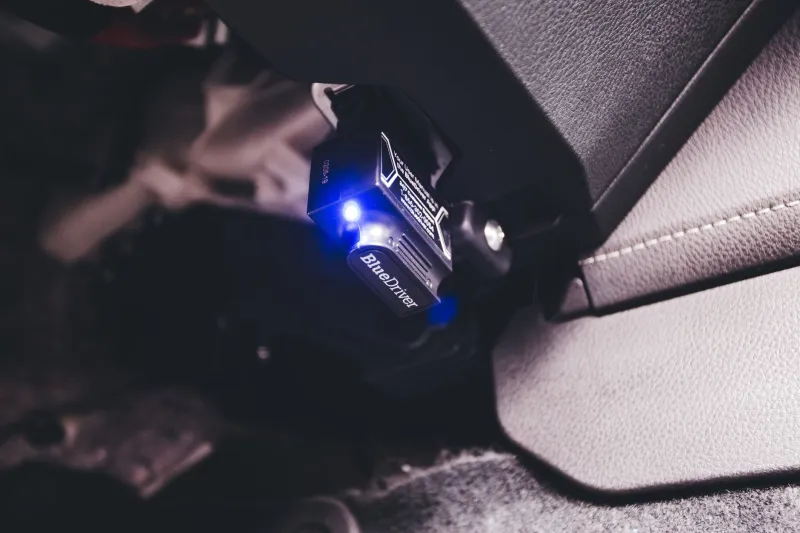
If you have a Bluetooth OBD-II adapter — a $25 investment worth making — check for pending and stored codes immediately after a symptom occurs. Don't wait. Those codes can clear themselves after enough normal drive cycles, and that data disappears with them.
How to Give a Technician a Fighting Chance
When you bring the car in, present your documentation up front. A good tech will take it seriously. The pattern you've observed — "it always happens when the engine is cold and I'm on the highway" or "it only acts up in temperatures above 85 degrees" — can cut diagnostic time dramatically.
Ask the shop specifically whether they found any stored or pending codes, not just active ones. Request that they not clear codes until you've both reviewed what's there. And if the problem is truly elusive, ask about leaving the car for an extended diagnosis where they can drive it across multiple conditions.
Some intermittent faults require specialized equipment like a data logger that records live sensor data over time, allowing a tech to go back and see exactly what was happening when the fault occurred. Not every shop has this capability — it's worth asking.
The Frustrating Truth
Intermittent faults sometimes take multiple shop visits to resolve. That's not necessarily a sign of incompetence — it's the nature of the problem. What separates a fast resolution from a months-long ordeal is the quality of information the technician has to work with.
Your documentation is part of the diagnostic process. The more precise your observations, the less your mechanic is hunting blind.
Diagnose it. Fix it. Drive it.