No Codes, No Answers: When Your Gut Knows Something Your Scanner Doesn't

No Codes, No Answers: When Your Gut Knows Something Your Scanner Doesn't
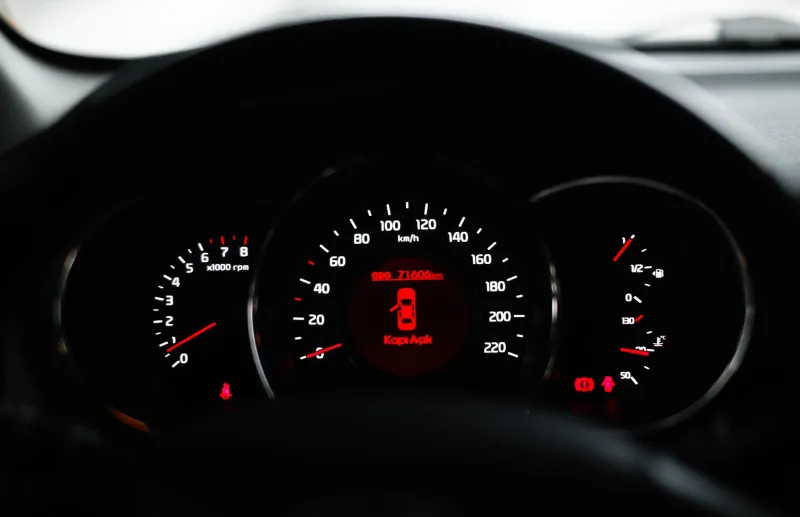
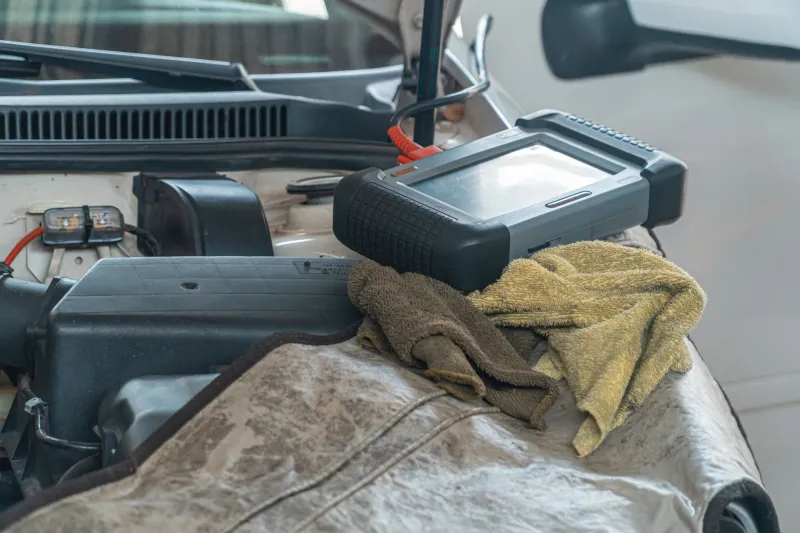
You plugged in the scanner. It came back clean. Zero codes, zero pending faults, zero everything. So why does the car still feel like it's lying to you?
That low-grade vibration at highway speed. The subtle hesitation when you accelerate from a stop. The brake pedal that feels just a little mushier than it used to. None of it shows up on your readout, but you know your car — and something isn't right.
Here's the thing: your instincts aren't wrong. Your scanner might just be looking in the wrong places.
What a Scanner Actually Does (and Doesn't Do)
An OBD-II scanner reads data from sensors that are wired into your vehicle's electronic control systems. When a sensor value falls outside a programmed threshold, a code gets flagged. Simple enough.
But that system has a hard limit: it only knows what it can measure. If a component is failing in a way that hasn't yet crossed a sensor's detection threshold, or if the failure lives entirely outside the sensor network, the scanner won't see it. Not because it's broken — because it was never designed to catch everything.
Think of it like a smoke detector. It'll scream when there's smoke. It won't tell you the wiring behind the wall is slowly getting hot.
The Intermittent Fault Problem
One of the most frustrating situations in automotive diagnosis is the intermittent fault — a problem that shows up sometimes, disappears before you can catch it, and leaves no stored code behind.
Maybe your transmission slips on cold mornings but shifts fine by the time you reach the shop. Maybe a misfire pops up under load on the highway but never reproduces itself at idle in a parking lot. The ECU may log a fault temporarily, then clear it after a set number of clean drive cycles. By the time you scan the car, the evidence is gone.
This is where freeze frame data becomes valuable — but even that has gaps. If the fault didn't trip a code, there's no freeze frame to look at. You're left with symptoms and no digital trail.
In cases like these, a symptom log is your best tool. Write down when it happens, under what conditions (temperature, speed, load, time of day), and how long it lasts. Patterns in your notes can point a good mechanic in the right direction even when the scanner can't.
Mechanical Problems That Leave No Fingerprint
This is where drivers get burned the most. A lot of serious mechanical issues generate zero codes because they don't involve a sensor that's out of range — they involve physical wear that the computer simply isn't tracking.
Here are some common examples:
Worn brake hardware. Your ABS module monitors wheel speed sensors. It doesn't know your brake pads are glazed, your rotors are warped, or your calipers are sticking. A soft or pulsating pedal is your only warning — and it won't show up in a scan.
Suspension and steering wear. Ball joints, tie rod ends, control arm bushings — all of these degrade gradually and physically. The car might pull, wander, or feel vague at highway speeds. No sensor is watching for that. You feel it before any system knows about it.
Exhaust leaks. A crack or loose joint upstream of the oxygen sensor can skew O2 readings and eventually trigger a code — but early on, you'll just smell it or hear a slight ticking at startup. No code, real problem.
Cooling system slow leaks. A small weep from a hose, a slight seep at the water pump — the coolant level sensor (if your car even has one) won't flag anything until the level drops significantly. Meanwhile, you might notice the temp gauge creeping slightly higher on long drives.
Early bearing wear. A wheel bearing in the early stages of failure produces a hum or drone that changes with speed or load. Nothing in the OBD-II ecosystem is listening for that. Your ears are.
Sensor Blind Spots Are Real
Even within the sensor network itself, there are gaps. Sensors measure what they're pointed at — and sometimes what they're pointed at doesn't tell the whole story.
A mass airflow sensor, for example, measures incoming air volume. But if there's a vacuum leak downstream of the MAF, unmetered air enters the system and the sensor never sees it. The engine runs lean, you feel it as a rough idle or hesitation, but the MAF reading looks normal. The fault might eventually show up as a fuel trim code — or it might not, depending on how small the leak is.
Same goes for coolant temperature sensors. They measure the temperature at one specific point in the cooling system. If you have a localized hot spot caused by a partially blocked passage or a weak water pump, the sensor might read fine while a cylinder head is quietly running hotter than it should.
The sensor isn't lying. It's just only telling part of the truth.
A Practical Framework for Chasing No-Code Symptoms
So what do you actually do when the scanner says everything's fine but the car disagrees? Here's how to approach it:
1. Document everything. Date, time, conditions, exact symptom. Be specific. "Vibration between 65–70 mph that goes away above 75" is far more useful than "it shakes sometimes."
2. Do a physical inspection first. Walk around the car. Check fluid levels. Look under the hood for anything obviously loose, cracked, or leaking. Get under the car if you can safely do it. A lot of no-code problems are visible if you know where to look.
3. Check your live data, not just fault codes. A good scanner will show you real-time readings — fuel trims, O2 sensor voltage, coolant temp, MAF values. Abnormal live data can point to a problem even when no code has been set.
4. Replicate the symptom deliberately. If the problem only happens under specific conditions, try to recreate those conditions. A test drive with intention beats sitting at idle in the driveway.
5. Trust the symptom as the diagnostic. A vibration, a smell, a sound — these are data. Treat them with the same seriousness you'd give a stored code. Sometimes more.
The Scanner Is a Starting Point
No one is saying to throw your scanner in the trash. It's one of the most useful tools in a diagnostic toolkit. But it works best when you understand what it's actually doing — reading sensor data and flagging threshold violations — rather than treating it as an all-knowing oracle.
Some of the most expensive repairs a car owner will ever face start with a symptom and no code. A timing chain that's stretched. A head gasket that's seeping. A transmission that's slipping at the edge of its programming. These things don't always announce themselves digitally. They announce themselves through how the car drives.
You know your vehicle. If something feels off, that feeling is data. Don't let a clean readout talk you out of investigating further. The scanner confirms what it can see — you're the one who notices everything else.