That Shudder, Slip, or Surge Isn't Normal: Decoding What Your Transmission Is Desperately Trying to Say

That Shudder, Slip, or Surge Isn't Normal: Decoding What Your Transmission Is Desperately Trying to Say
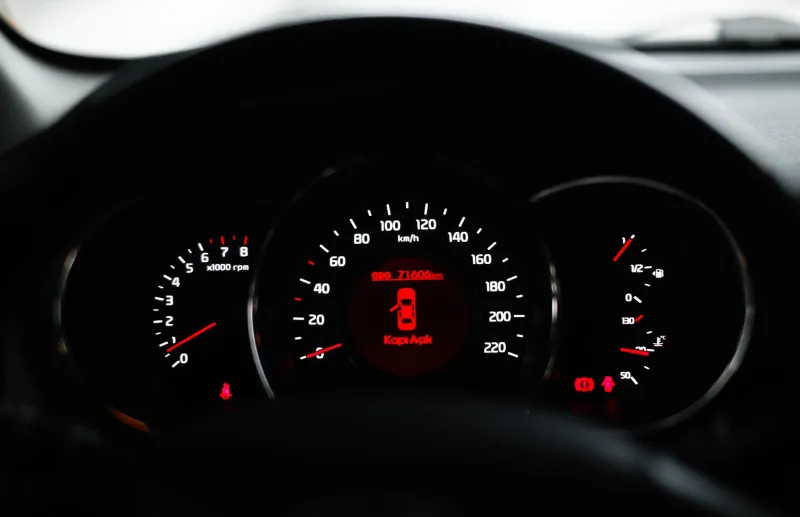
You're cruising down the highway, maybe somewhere between exits on I-70, and your car does this weird little shudder — like it hiccupped. Or maybe it hesitates before grabbing second gear. You glance at the dashboard, and sure enough, the check engine light is glowing. You pull the code and get something like P0700. Your first instinct? "Probably nothing serious."
Here's the thing: transmission codes don't show up to make conversation. They show up because something in one of the most complex — and expensive — systems in your vehicle has gone sideways. The good news is that not every transmission code means you're headed for a rebuild. The bad news is that ignoring the wrong one absolutely can get you there.
Let's break down what these codes are actually telling you, in plain language, without the shop-speak.
What P0700 Actually Means (It's Not the Full Story)
P0700 is probably the most misunderstood transmission code out there. When people see it, they assume it's the diagnosis. It isn't. P0700 is a flag — it means the Transmission Control Module (TCM) has detected a fault and has sent that information over to the Powertrain Control Module (PCM) to trigger the check engine light.
Think of it like a forwarded email. The message exists, but you still need to open the original to know what's actually going on.
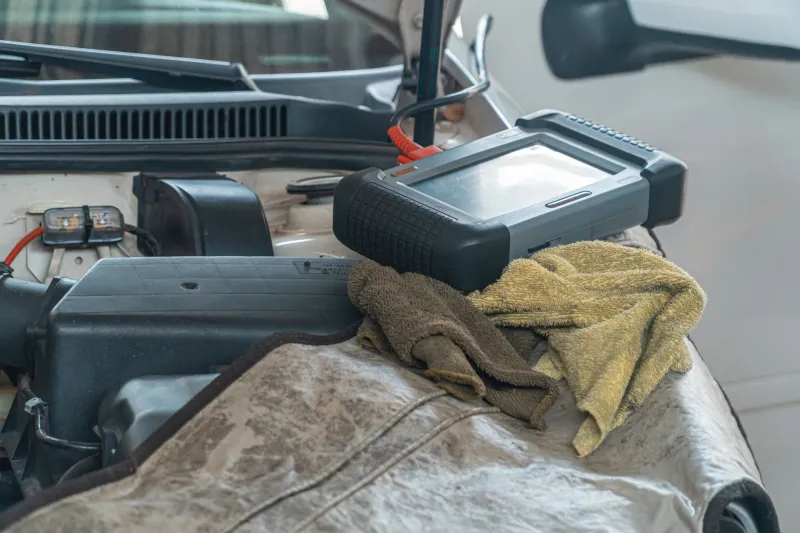
To get the real story, you need to pull codes directly from the TCM, not just the generic OBD-II system. Many basic code readers stop at P0700. A scan tool that can access transmission-specific modules will show you the actual fault — something like P0715, P0730, P0741, or P0868. That's where the diagnostic work really begins.
The Code Breakdown: Common Transmission Faults Explained
P0715 – Input/Turbine Speed Sensor Circuit Malfunction
This sensor monitors how fast the transmission's input shaft is spinning. When it's reading incorrectly — or not reading at all — the TCM can't properly calculate shift timing. You'll often notice harsh or erratic shifts, or the transmission hunting between gears. The sensor itself is usually inexpensive, but the labor to access it varies a lot by vehicle. On many front-wheel-drive platforms, it's a reasonably straightforward job. On others, it's buried deep.
P0730 – Incorrect Gear Ratio
This one's a little more ominous. It means the TCM expected one gear ratio and got something different. It could point to worn clutch packs, a slipping torque converter, or solenoid issues — but it can also be triggered by low or contaminated fluid. Before anyone starts talking about internal repairs, check the fluid condition and level first. Dirty, burnt-smelling fluid is a major clue.
P0741 – Torque Converter Clutch Circuit Performance or Stuck Off
The torque converter clutch (TCC) locks up at highway speeds to improve fuel efficiency. When it's not engaging properly, you'll often feel that tell-tale shudder at around 40–50 mph — a rhythmic vibration that comes and goes. Some drivers mistake this for a tire balance issue or even a misfire. P0741 can sometimes be resolved with a fluid and filter service, especially if it's been neglected. If the shudder persists after fresh fluid, the TCC itself or the solenoid controlling it may need attention.
P0868 – Transmission Fluid Pressure Low
Fluid pressure is what makes everything inside an automatic transmission work. Clutches engage, bands apply, solenoids respond — all based on hydraulic pressure. When pressure drops, things slip. This code can be caused by a worn pump, a clogged filter, a failing pressure control solenoid, or simply low fluid due to a leak. Don't drive on this one. Low pressure accelerates wear on every internal component simultaneously.
P0882 – TCM Power Input Signal Low
Sometimes the issue isn't mechanical at all — it's electrical. P0882 suggests the TCM isn't receiving adequate voltage. This could be a wiring problem, a bad ground, or even a failing battery causing voltage fluctuations. It's worth checking the basics before assuming the worst.
Software Glitch, Fluid Problem, or Mechanical Failure: How to Tell the Difference
This is the critical question, and honestly, it's where a lot of people get steered wrong at the shop. Here's a rough framework:
Software or electrical issues tend to produce codes without obvious driveability symptoms. The car shifts fine, nothing feels wrong, but a code is present. TCM software updates are more common than people realize — some manufacturers have issued reflashes specifically to address false fault codes or shift quality complaints. If the vehicle shifts normally and the fluid looks good, don't skip asking whether a software update is available for your specific make and model.
Fluid-related problems usually show up as sluggish, delayed, or rough shifts — especially when the transmission is cold. Pull the dipstick (if your vehicle has one) and look at the fluid. Dark brown or black color, a burnt smell, or visible particles are all red flags. Fresh transmission fluid is typically red or pink and smells faintly sweet. A fluid and filter service is one of the most cost-effective preventive steps you can take, and it should be the first thing ruled out before any internal diagnosis.
Mechanical failures tend to feel more dramatic and progressive. Slipping under load, a total refusal to engage a specific gear, clunking noises, or a transmission that goes into limp mode (locked in second or third gear, won't shift) all suggest internal wear or damage. These situations require hands-on diagnosis from someone with transmission-specific experience — and ideally a shop that will give you a teardown estimate before committing to a full rebuild.
Limp Mode: Your Transmission's Version of a Distress Signal
If your vehicle suddenly feels underpowered, won't shift above a certain gear, and seems stuck in a narrow RPM range, you've likely entered limp mode. This is the TCM's way of protecting the transmission from further damage by limiting operation. It's not a permanent state — clearing the code and restarting the vehicle may temporarily restore normal function — but the underlying fault is still there.
Don't use limp mode recovery as a long-term strategy. Every mile driven on a compromised transmission is a gamble.
What You Should Do Right Now
If you've got a transmission code sitting in your system, here's a practical sequence:
- Pull the full code list using a scan tool that accesses the TCM directly, not just the generic OBD-II system.
- Check the fluid — level, color, and smell. If it's due for a service, do it before anything else.
- Note the symptoms — when does the shudder or slip happen? Cold starts? Highway speeds? Under hard acceleration? Specific patterns help narrow the diagnosis significantly.
- Research TSBs (Technical Service Bulletins) for your vehicle. Manufacturers issue these regularly for known transmission quirks, and they're publicly searchable through the NHTSA website.
- Get a second opinion before authorizing major transmission work. Transmission repairs are one of the areas where estimates can vary wildly between shops.
Your transmission has been trying to tell you something. The code is just the beginning of the conversation — but at least now you know how to listen.