That Amber Glow Just Lit Up Your Dashboard — Stay Calm and Do These Things in the Next 30 Minutes
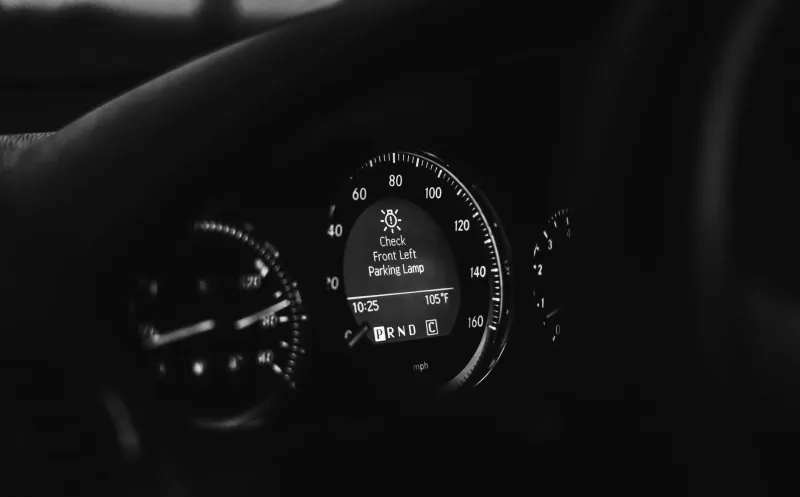
It happens to everyone eventually. You're cruising down the highway, maybe somewhere between your morning coffee and your first meeting, and that little amber icon shaped like an engine silhouette blinks on. Your heart rate ticks up. Your mind jumps straight to worst-case scenarios and dollar signs.
Here's the reality check: the check engine light (officially called the Malfunction Indicator Lamp, or MIL) illuminates for hundreds of different reasons — from a loose gas cap to a misfiring cylinder. The light itself doesn't tell you how serious the problem is. Your next 30 minutes do. Let's walk through exactly what to do.
Minute 1–3: Read the Room (and the Dashboard)
Before you do anything else, take five seconds to scan your entire instrument cluster. The check engine light doesn't exist in isolation — other warning indicators can give you critical context.
Is the check engine light steady or flashing?
This distinction matters more than almost anything else in those first moments.
- Steady light: The system has detected a fault, but it's not considered an immediate emergency. You likely have time to drive to a safe location, assess the situation, and get the car diagnosed without pulling over on the spot.
- Flashing or blinking light: This is your car telling you something is actively wrong right now. A flashing MIL almost universally indicates an active engine misfire severe enough to damage the catalytic converter. Pull over safely as soon as you can, reduce your speed, and avoid heavy acceleration.
Also check your temperature gauge and oil pressure indicator. If either of those is in the red alongside a check engine light, the calculus changes immediately — that's a pull-over-now situation regardless of what else is going on.
Minute 3–8: Notice How the Car Is Behaving
Your senses are diagnostic tools. While you're continuing to drive (if the light is steady and nothing else seems wrong), pay attention to how the vehicle feels.
Signs that suggest you should stop driving soon:
- Noticeable loss of power or the engine feels like it's struggling
- Rough idling or shaking at stops
- Unusual smells — burning, fuel, or something sweet like coolant
- Smoke from under the hood
- The car hesitates or stumbles when you accelerate
Signs that suggest you're probably okay to keep going for now:
- The car drives completely normally
- No unusual sounds or smells
- No other warning lights
- The light came on right after you got gas (a loose gas cap is a genuinely common trigger)
If the car feels fine and the light is steady, you're in good shape to proceed to the next steps without panic.
Minute 8–15: Grab a Scanner — Seriously, It's Worth It
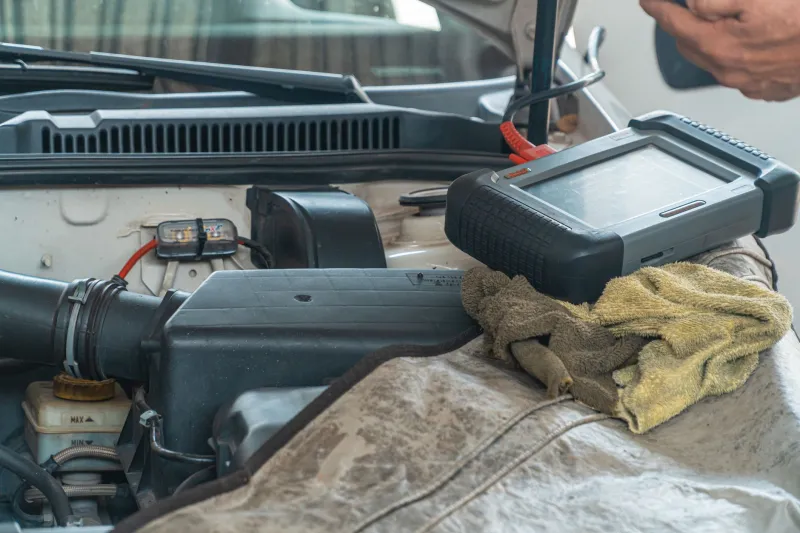
This is where you get actual information instead of guessing. An OBD-II scanner plugs into the diagnostic port in your car — almost always located under the dashboard on the driver's side, within a foot or so of the steering column. Every vehicle sold in the US since 1996 has this port.
You don't need a professional-grade scanner. A basic Bluetooth OBD-II adapter paired with a free app on your phone (like Torque or Car Scanner) runs $25–$40 on Amazon and gets the job done for reading codes. Standalone handheld units from brands like Autel or Innova are available at AutoZone or O'Reilly Auto Parts for $30–$80 and are dead simple to use.
 Photo: O'Reilly Auto Parts, via classroomclipart.com
How to pull your codes:
- Turn off the engine and plug the scanner into the OBD-II port
- Turn the ignition to the "on" position (you don't need to start the engine)
- Follow the scanner's prompts to read stored codes
- Write down every code that appears — even ones marked "pending"
You'll see codes that look like P0xxx, P1xxx, B0xxx, or C0xxx. The "P" codes are powertrain-related and the most common. Write them down exactly as they appear.
Minute 15–22: Decode What You've Got
Now you have real data. A quick search of your code on a site like codeoneauto.com or a Google search of the code plus your vehicle's year, make, and model will give you a solid starting point on what system is affected.
A few things to keep in mind as you research:
- A code is a clue, not a verdict. P0420, for example, points to the catalytic converter system — but it doesn't necessarily mean the converter is dead. It could be an oxygen sensor, an exhaust leak, or a fuel delivery issue.
- Pending codes mean the fault was detected once but hasn't been confirmed yet. These are worth noting but may resolve on their own or confirm on the next drive cycle.
- Multiple codes together often tell a more complete story. If you see a misfire code alongside a lean fuel trim code, those are likely connected.
Armed with this information, you're no longer walking into a shop blind.
Minute 22–30: Make a Decision
With your codes in hand and a sense of how the car is driving, you can now make an informed call.
If you have a flashing light or the car is driving poorly: Don't push it. Have the car towed or drive it as gently as possible to the nearest trusted shop. Continuing to drive through an active misfire can turn a $200 repair into a $1,500 catalytic converter replacement.
If the light is steady and the car drives normally: You likely have a day or two to get it properly diagnosed. Use that time wisely — research your code, call around for diagnostic quotes, and consider a shop that does a proper inspection rather than just reading the code and replacing the most obvious part.
If the only code is P0456 or P0457 (EVAP leak) and you just got gas: Tighten your gas cap, clear the code with your scanner, and drive normally for a day. This genuinely does fix the problem a surprising percentage of the time.
One More Thing: Don't Let Urgency Be Used Against You
Shops know that a lit check engine light makes drivers anxious, and some lean into that anxiety. If a technician pulls your code in two minutes and immediately quotes you a repair without explaining their diagnostic process, it's fair to ask questions. What tests confirmed this is the actual cause? Is the failed part the root problem or a symptom of something else?
Knowing your codes before you walk in the door levels the playing field. You're not being difficult — you're being a smart car owner.
The check engine light is your vehicle starting a conversation. The next 30 minutes are about listening carefully before you react. Diagnose it. Fix it. Drive it.