They Cleared the Code and Called It Fixed: How to Know If Your Repair Actually Worked
You picked up your car, drove off the lot, and somewhere between the dealership and your driveway — or maybe your office parking garage the next morning — that little amber light came back on. Same code. Same story. Different bill.
This isn't a rare situation. It's one of the most common frustrations car owners run into, and it has a name in the diagnostic world: a cleared-but-not-resolved fault. The code gets wiped, the light goes dark, and the shop declares victory. But the underlying condition that triggered the code in the first place? Still there. Still doing its thing. Just waiting for enough drive cycles to announce itself again.
So how do you protect yourself? By understanding what a real repair looks like from a data standpoint — and by doing a little follow-up homework before you assume the job is done.
Why Shops Clear Codes Without Fully Fixing the Problem
Let's be fair here: not every shop that clears a code is trying to pull one over on you. Sometimes a technician genuinely believes a repair resolved the fault and clears the code to see if it returns. That's a legitimate diagnostic step. The problem is when clearing the code becomes the endpoint rather than a checkpoint.
In a busy shop environment, there's pressure to move cars through quickly. A code gets cleared, the light goes off, and the vehicle passes a quick visual check. If the root cause is intermittent — say, a loose connector that only acts up under specific temperature or load conditions — it might not retrigger during the short test drive. The car goes back to you. You drive it for two days. The code comes back.
Dealerships aren't immune to this either, even with factory-level scan tools and trained technicians. Intermittent faults, multiple contributing causes, and software-related issues can all slip through a surface-level fix.
What a Real Fix Looks Like in the Data
Here's the thing most repair shops won't walk you through: after a legitimate repair, your car's onboard diagnostic system needs time to confirm the fix. That confirmation happens through something called readiness monitors — internal self-tests that your vehicle runs during normal driving to verify that major systems are functioning correctly.
When a shop clears your codes, those monitors get reset to "incomplete" or "not ready." They have to run through specific drive cycles before they'll report back as "ready." If your car fails an emissions test right after a repair, this is usually why.
More importantly for you: if a fault truly has been resolved, those monitors will eventually complete without triggering a new code. If the underlying problem is still there, the code will come back before some or all of those monitors finish running.
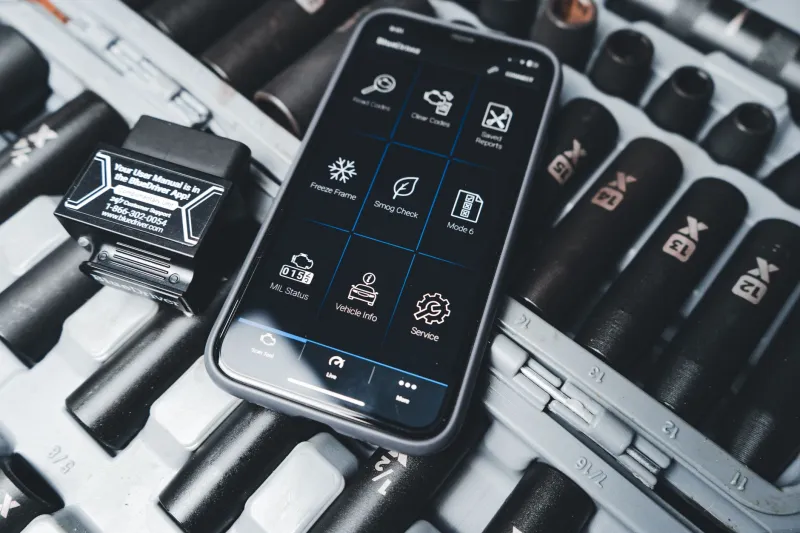
What you should do: Grab your OBD-II scanner — even a basic Bluetooth dongle and a free app will work here — and check your monitor status after any repair. If the relevant monitor (EVAP, oxygen sensor, catalyst, misfire, etc.) comes back as "ready" without a new code appearing, that's a good sign. If the code returns before the monitors complete, the repair didn't hold.
Live Data: The Follow-Up Check Most Owners Skip
Readiness monitors tell you whether the system passed its self-test. Live data tells you how it's performing in real time. And comparing live data before and after a repair is one of the most useful things you can do as an informed car owner.
Say your car threw a P0171 — system too lean, Bank 1. A shop replaces the MAF sensor and sends you home. Before you leave, or right after you get home, pull up your live data and look at a few key values:
- Short-term and long-term fuel trims: After a proper MAF sensor fix, these should be close to zero (within roughly ±5%). If your long-term fuel trim is still sitting at +15% or higher, the sensor swap may not have solved the actual lean condition.
- MAF sensor readings: At idle, a typical reading for a warmed-up engine is somewhere in the 2–7 g/s range depending on engine size. If it looks wildly off, something's still wrong.
- O2 sensor voltage: On a functioning system, your upstream oxygen sensor should be switching regularly between rich and lean readings (roughly 0.1V to 0.9V). A flatlined sensor is a problem, even if the code has been cleared.
You don't need to be a technician to collect this data. You just need to screenshot or record it, and compare it to what you're seeing a few days later after some real-world driving.
Before You Leave the Shop: Ask These Questions
The best time to verify a repair is before you hand over your credit card. Here are a few questions worth asking directly:
"Can you show me the live data before and after the repair?" A shop with a good diagnostic process should have pre-repair data on file. If they cleared the code and don't have any comparison data, that's a yellow flag.
"What drive cycle did you run to confirm the fix?" Some repairs require a specific series of driving conditions to fully validate — cold start, highway speed, deceleration, etc. Ask if they ran one and what it showed.
"Is this repair covered under any warranty?" Most reputable shops offer at least a 12-month/12,000-mile warranty on parts and labor. Get it in writing. If the code comes back within that window, you have grounds to bring the car back at no additional charge.
"What was the root cause, not just the symptom?" If a shop replaced a part without explaining why that part failed, there's a chance the underlying condition — a vacuum leak, a wiring issue, contaminated fuel — is still present and will take out the new part too.
If the Code Does Come Back
Don't panic, but don't ignore it either. Document everything. Note the date the repair was completed, the mileage, and the date the code returned. Pull the freeze frame data from your scanner — it captures the engine conditions at the exact moment the fault was logged, which can help a technician (or you) understand whether this is the same failure mode or something new.
If you're going back to the same shop, bring that data with you. It shifts the conversation from "I think it's still broken" to "here's what my scanner shows, and here's why I believe the root cause wasn't addressed." That's a much stronger position to be in.
And if the shop pushes back or insists the repair was complete? Get a second opinion from an independent diagnostic specialist. Sometimes a fresh set of eyes — and a fresh scan — is all it takes to find what got missed the first time around.
The Bottom Line
A cleared code is not a fixed car. It's a starting point. Real repairs show up in the data — in readiness monitors that complete cleanly, in fuel trims that normalize, in sensors that behave the way they're supposed to. The warning light is just the messenger. The data is the actual story.
You don't have to take anyone's word for it. Plug in your scanner, know what to look for, and let the numbers tell you whether the job got done right. That's what being your own best advocate actually looks like.